This is a story about curiosity, discipline, and choosing skills over titles.
From Oil & Gas to Code — A Journey Built on Skills, Not Papers
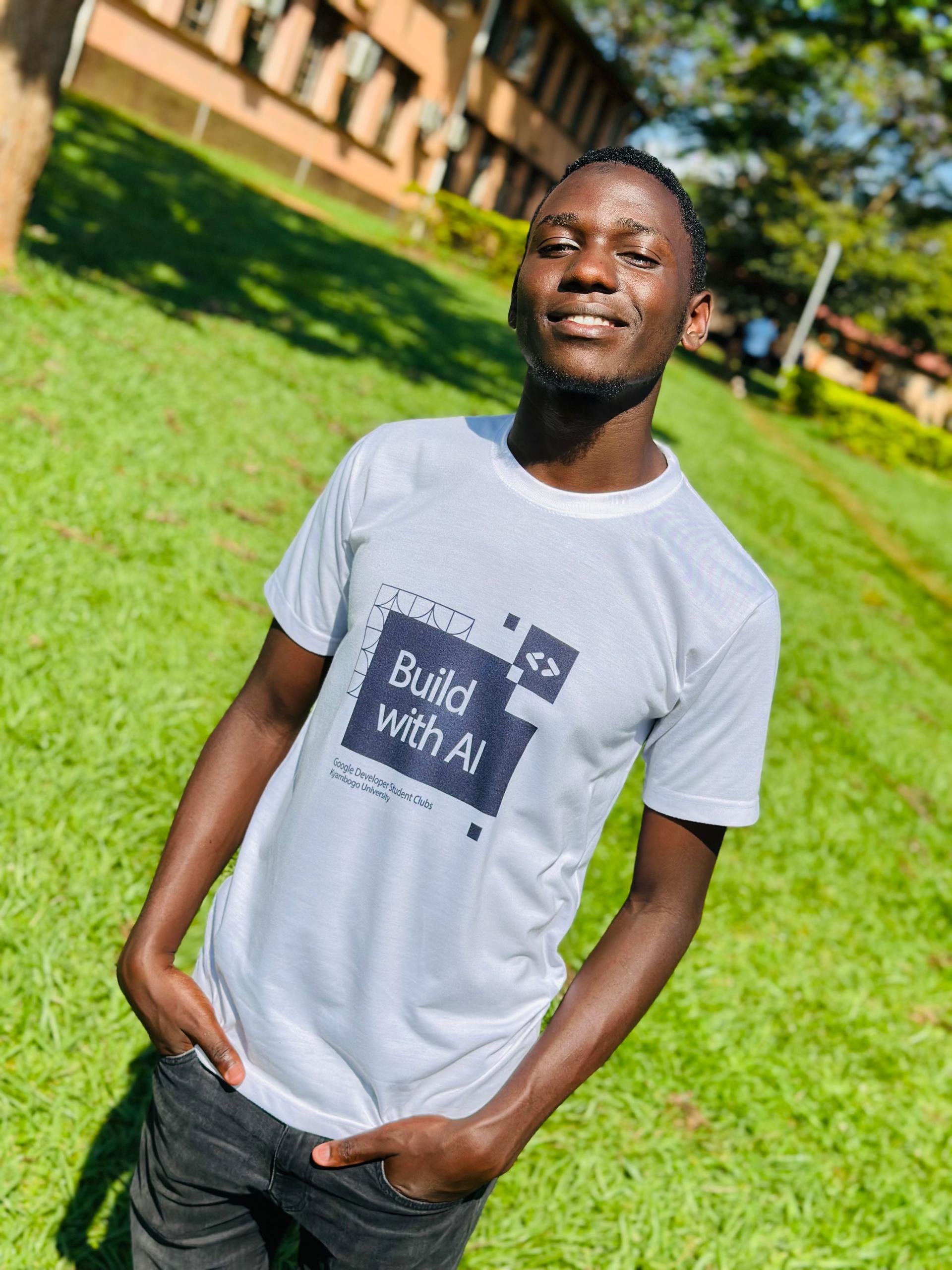
My name is Ashiraf Ssenkima, born and raised in Sembabule, Uganda.
From an early age, I was driven by curiosity — the desire to understand how things work, not just how to use them. I dismantled electronics, studied systems, and questioned processes long before I understood where that curiosity would lead.
That mindset guided me to pursue a Bachelor’s degree in Oil and Gas Production Engineering at Kyambogo University.
Engineering Foundations That Still Matter
During my university training, I worked extensively with industry tools such as:
- Petrel for reservoir modeling
- CMG for production forecasting
- OLGA for multiphase flow simulation
- Pipesim for pipeline and network analysis
These tools trained me to think in systems, constraints, and real-world trade-offs. I learned how to analyze complex problems, interpret data, and design solutions that work under pressure.
I enjoyed engineering. I enjoyed solving problems.
But everything changed in my final year.
The Final Year Project That Changed Everything
My final year project focused on pipeline monitoring and safety.
To visualize real-time sensor data, I decided to build a mobile application that could display live readings, alerts, and performance metrics.
That single decision altered my career path.
While building the app, I discovered Flutter.
For the first time, software felt intuitive — logical, structured, and deeply connected to engineering thinking.
There was:
- No computer science degree
- No formal software training
- No structured classroom
Only documentation, online tutorials, experimentation, mistakes, and persistence.
Learning Software the Hard Way — By Building
Within weeks, I was developing:
- Real-time dashboards
- Sensor-driven mobile applications
- Data visualization systems
- Backend-connected Flutter apps
I taught myself Flutter, Dart, Firebase, and later explored TensorFlow Lite for anomaly detection.
I studied:
- Clean architecture principles
- State management with BLoC
- Dependency injection using GetIt
- End-to-end mobile system design
All of it came from building real things, not collecting certificates.
Every working feature became proof that skills compound faster than titles.
The Video That Marked a Turning Point
The video below was created after completing my final year project.
It represents the moment I realized that software development was not an experiment — it was a direction.
Final Year Project Demonstration
Not Leaving Engineering — Evolving It
I did not abandon oil and gas engineering.
I evolved it.
Modern engineering no longer ends with physical systems. It extends into:
- Software-driven monitoring
- Data-powered decision making
- AI-assisted diagnostics
- Real-time visualization platforms
From pipeline safety to intelligent monitoring systems, the future lies at the intersection of engineering and software.
Facing Doubt Without a CS Degree
Yes, I faced doubt.
Questions about:
- My academic background
- The absence of a computer science paper
- Whether self-taught skills were “enough”
But every deployed app, every real-time graph, and every solved problem answered those doubts clearly.
Working systems speak louder than certificates.
Why This Story Matters
This story is not about abandoning one field for another.
It is about:
- Self-belief
- Consistency over comfort
- Learning by doing
- Solving real problems
From oil rigs to mobile apps.
From simulations to software systems.
This is my journey.
And it is only the beginning.
About the Author
Ssenkima Ashiraf
Founder & Marketing Director at BuzTip
Ashiraf writes about startups, software development, and building practical systems through real skills, engineering discipline, and hands-on experience.
Published on 09 February 2026