
At Apple Inc., leadership transitions are never loud. They are not announced with fanfare or preceded by public speculation campaigns. They are calculated, quiet, and strategic—designed to preserve the single most valuable asset the company possesses: continuity of vision. Yet for the first time in over a decade, the technology world is asking a question that will define the next era of the world's most valuable company: who comes after Tim Cook?
For more than thirteen years, Tim Cook has led Apple through what can only be described as one of the most successful operational eras in corporate history. When he assumed the role in August 2011, the world was skeptical. How could an operations executive—a numbers man from Alabama with a soft-spoken Southern drawl—possibly fill the void left by Steve Jobs, the mercurial visionary who had redefined entire industries?
Cook answered that question not with charisma, but with execution. He transformed Apple's supply chain into an unassailable competitive advantage. He built a services ecosystem that now generates over $85 billion annually. He positioned privacy as a core brand value in an industry built on surveillance. And he did all of this while guiding Apple from a $350 billion company to a $3 trillion titan—the most valuable publicly traded company in the history of capitalism.
But Apple is a company that thinks in decades, not quarters. And as Cook enters his mid-sixties, the machinery of succession planning—long a hallmark of Apple's boardroom discipline—has begun to turn. The question is no longer if leadership will change. It is when, and who comes next.
- Why John Ternus has emerged as the leading internal candidate to succeed Tim Cook
- The structural logic behind the Cook-to-Chairman transition model
- What the Tim Cook era actually built—and why his successor inherits a different company
- How a Ternus-led Apple might shift toward deeper hardware-software integration
- The broader implications for CEO archetypes in global business
The Emerging Successor: Who Is John Ternus?
In the quiet corridors of Apple Park, where executive visibility is carefully managed and public personas are sculpted with precision, one name has begun to surface with increasing frequency in succession discussions: John Ternus. He is not a household name. He does not command the stage presence of a traditional CEO archetype. But within Apple, and increasingly among industry analysts who track the company's leadership trajectory, Ternus is viewed as the frontrunner.
John Ternus currently serves as Apple's Senior Vice President of Hardware Engineering, a role that places him at the very center of the company's product universe. He oversees the engineering teams responsible for the iPhone, iPad, Mac, AirPods, and the broader hardware ecosystem that generates the majority of Apple's $383 billion in annual revenue. He is, in the most literal sense, the person responsible for the physical manifestation of Apple's vision.
Ternus joined Apple in 2001 as a product design engineer, working his way through the ranks with a quiet intensity that has become his professional signature. His career trajectory is marked by increasingly complex leadership roles: Vice President of Hardware Engineering for the Mac, then for the iPhone, and finally—since 2021—the senior-most hardware executive in the company. Along the way, he led the engineering transition from Intel processors to Apple Silicon, a multi-year undertaking that required coordinating thousands of engineers across dozens of disciplines while maintaining absolute secrecy and hitting unforgiving deadlines.
What makes Ternus particularly compelling as a succession candidate is not simply his technical depth, though that is considerable. It is the increasing visibility he has assumed in Apple's public product launches. In recent keynotes, Ternus has been entrusted with increasingly prominent segments—introducing flagship products, explaining complex technological transitions, and embodying the calm confidence that Apple projects to its customers. This is not accidental. At Apple, keynote visibility is a carefully calibrated signal of internal standing.
His profile fits what the modern CEO role demands: deep technical understanding of the products that generate revenue, proven execution on high-stakes, multi-year projects that cannot fail, increasing comfort with the public-facing dimensions of leadership, and strong internal positioning within Apple's unique culture. Unlike traditional executives who rise through finance, marketing, or general management tracks, Ternus represents something different. He is an engineer who has learned the business, rather than a businessperson who learned about engineering.
The Significance of Hardware Leadership
There is a reason Apple's succession calculus appears to be gravitating toward a hardware executive rather than, say, the head of Services or Software. Apple remains, at its core, a products company. Services revenue, while massive and growing, is downstream from device sales. The App Store generates revenue because people own iPhones. Apple Music subscriptions exist because people own AirPods. The ecosystem is built on a hardware foundation, and the executive who understands that foundation most intimately holds a unique claim on the company's future.
Ternus's leadership of the Apple Silicon transition revealed something critical about his capabilities. That project was not merely a technical migration. It was an existential bet—a decision to walk away from Intel, a partner of fifteen years, and bet the company's entire Mac business on internally designed chips. The engineering complexity was staggering: coordinating silicon design teams, operating system engineers, app developers, and manufacturing partners across a timeline that could not slip. The transition was executed flawlessly. The M-series chips have become a defining competitive advantage for the Mac. And Ternus was at the center of it.
The Transition Model: Executive Chairman
The speculation surrounding Apple's leadership transition does not envision a clean break. The most discussed scenario involves Tim Cook stepping into an Executive Chairman role while a new CEO—likely John Ternus—assumes day-to-day operational leadership. This model is not novel in large corporations, but its application at Apple would be particularly significant given the company's unique governance history.
The Executive Chairman structure separates the traditional CEO responsibilities into two roles. The Chairman maintains oversight of long-term strategy, board relations, and major decisions that shape the company's multi-decade trajectory. The CEO assumes responsibility for daily operations, product execution, and the leadership of the executive team. It is a structure designed to provide continuity during moments of significant transition.
This model has been employed successfully at other technology giants. Microsoft executed a version of it when Bill Gates transitioned from CEO to Chief Software Architect and later Chairman, allowing Steve Ballmer and eventually Satya Nadella to operate with strategic guidance from the company's co-founder. The critical difference at Apple is that Cook, unlike Gates, was not a founder. His authority derives not from visionary genesis but from operational excellence and the trust he has earned over decades of execution. That makes his ongoing presence particularly valuable during a transition—he is the institutional memory of Apple's modern structure.
The Cook (Chairman) Mandate
Long-term strategic oversight, board governance, major capital allocation decisions, geopolitical navigation, and preserving the institutional culture that has defined Apple's approach to product development.
The Ternus (CEO) Mandate
Day-to-day operational leadership, product execution across hardware and software divisions, team leadership and talent development, and the public face of the company's product vision.
For Apple, stability is everything. The company's value—and its brand—rest on the perception of seamless continuity. A sudden break in leadership, without the scaffolding of a transitional structure, would create uncertainty. Uncertainty unsettles investors. It unsettles the supply chain partners who depend on Apple's predictable rhythms. It unsettles the engineering teams who need clarity about who sets priorities. The Executive Chairman model addresses these risks directly.
Key insight: The Cook-to-Chairman transition is not about Cook leaving. It is about Cook remaining in a role specifically designed to support and guide the next CEO through the most critical leadership transition in Apple's modern history.
The timing of such a transition remains speculative. Cook has given no public indication of imminent departure, and Apple's board—led by Chairman Art Levinson—maintains the company's characteristic silence on succession matters. But the signals are there for those who watch carefully. The increased visibility of potential successors at product events. The gradual delegation of responsibilities that were once Cook's alone. The subtle but unmistakable grooming that occurs in any well-governed institution preparing for its next chapter.
The Tim Cook Legacy: What Is Actually Being Handed Over
To understand what the next CEO inherits, you must first understand what Tim Cook built. The temptation is to view Cook's tenure through the lens of Steve Jobs's absence—to define the Cook era by what it was not, rather than what it was. This is a fundamental mistake. Cook did not merely preserve what Jobs created. He built an entirely different company on top of the foundation he inherited.
When Cook became CEO in August 2011, Apple was a company defined by a handful of iconic products: the Mac, the iPod (already in decline), the iPhone (dominant but still early in its trajectory), and the iPad (new and untested). Revenue was $108 billion. The company employed 60,000 people. Its market capitalization hovered around $350 billion—remarkable, but a fraction of what was to come.
Cook's first and most transformative achievement was the reconstruction of Apple's global supply chain into a competitive weapon without peer. He brought to the CEO role the operational genius that had made him Jobs's indispensable lieutenant. Apple's ability to manufacture hundreds of millions of devices annually, with near-perfect quality control, across dozens of countries, while managing relationships with hundreds of suppliers—this is Cook's architecture. It is invisible to customers but fundamental to everything Apple does.
His second achievement was the construction of a services ecosystem that transformed Apple's revenue model. When Cook took over, Apple was almost entirely dependent on hardware sales. Today, the Services division—encompassing the App Store, Apple Music, iCloud, Apple Pay, Apple TV+, Apple Arcade, Apple Fitness+, and AppleCare—generates over $85 billion in annual revenue at margins exceeding 70%. This recurring revenue stream has fundamentally altered Apple's valuation, providing the predictability that institutional investors demand.
His third achievement was positioning privacy as a core brand value. In 2016, when the FBI demanded Apple create a backdoor to unlock the San Bernardino shooter's iPhone, Cook refused—publicly, forcefully, and at significant political risk. That decision, and the philosophy it embodied, has become one of Apple's most powerful differentiators. In an industry built on surveillance advertising, Apple stands apart. Cook made that decision not as a marketing tactic but as a moral commitment, and it has shaped the company's identity ever since.
The Company Cook Leaves Behind
The Apple that the next CEO will inherit is a fundamentally different institution than the one Cook received. It is larger, more complex, more global, and more dependent on institutional process than individual vision. Revenue has tripled. The employee base has more than doubled. The product portfolio has expanded into wearables, services, entertainment, and financial products. The company operates in nearly every country on Earth and navigates relationships with governments that view its platform power with increasing scrutiny.
This is not the Apple of "one more thing" keynotes. It is the Apple of global supply chains, regulatory negotiations, content production studios, and financial services compliance. It is a company that has outgrown the archetype of the singular visionary founder. And that is precisely why John Ternus—a systems thinker who understands the intersection of hardware, software, and operations—fits the profile of its next leader.
What a Ternus Era Could Look Like
If John Ternus becomes CEO of Apple—whether in two years or five—the shift will not be dramatic. Apple does not do dramatic leadership transitions. But it will be meaningful. A Ternus-led Apple would likely represent an evolution toward deeper product integration and an engineering-driven leadership culture, rather than a revolution in strategy.
The most immediate characteristic of a Ternus era would be a renewed emphasis on the hardware-software boundary—the seam where Apple's competitive advantage is most pronounced. Ternus has spent his career at the intersection of physical engineering and software capability. The Apple Silicon transition, which he led, is the purest example of this philosophy: control the silicon to control the experience. Expect this integration to deepen under Ternus's leadership, with hardware and software teams operating with even less separation than they do today.
A second characteristic would be faster iteration on core devices. Cook's tenure has been defined by operational excellence and strategic patience—the iPhone is updated annually, but rarely transformed. A Ternus-led Apple, with its engineering-centric DNA, might pursue more aggressive advancement cycles. Not because the market demands it, but because the engineering capability enables it. The M-series chip cadence—annual updates that deliver meaningful performance gains—might become the template for the broader product line.
A third characteristic would be the continuation of premium product positioning. There will be no race to the bottom under Ternus. His entire career has been built on the premise that engineering excellence commands premium pricing. The Apple products of a Ternus era would almost certainly remain at the top of the market, with margins that reflect the value of the integration only Apple can achieve.
What Would Continue
Premium pricing strategy, services ecosystem expansion, privacy as a core value, annual product cadences, global supply chain emphasis, and the Apple design philosophy that prioritizes simplicity and capability.
What Might Shift
Deeper hardware-software integration, faster silicon development cycles, engineering-driven product decisions, new product categories born from silicon capability rather than market demand, and a more technically focused public narrative.
The New Product Question
The most persistent question surrounding any Apple CEO transition is whether the new leader can deliver the next paradigm-shifting product category. Under Cook, Apple launched the Apple Watch and AirPods—both enormously successful products that defined new categories. But the question persists because Apple's identity is intertwined with the expectation of creating things that didn't exist before.
Ternus's background suggests that any new product category would likely emerge from silicon capability rather than market research. The Apple Vision Pro, while not a commercial success at its current price point, is an example of this approach: build a device that only Apple's chip technology can power, price it at the extreme premium, and iterate. A Ternus-led Apple would likely pursue similar bets—products that are technically impossible for competitors because they lack the silicon foundation.
The primary risk of an engineering-driven CEO is the temptation to pursue technical excellence for its own sake, building products that engineers admire but customers do not need. This is the classic engineering trap. Whether Ternus, if appointed, can balance technical ambition with market discipline will be one of the defining questions of a potential Ternus era.
The Broader Shift: What This Transition Means for Global Leadership
The potential elevation of John Ternus from hardware engineering chief to CEO of the world's most valuable company is not merely an Apple story. It is a signal—a data point in a broader transformation of what corporate leadership looks like in the twenty-first century. The archetype of the CEO is changing, and Apple, as it so often does, is at the leading edge of that change.
For most of the twentieth century, the CEO archetype was the charismatic generalist—the leader who could inspire, negotiate, and make high-stakes decisions across domains they did not personally understand in depth. Jack Welch at GE. Lee Iacocca at Chrysler. Even Steve Jobs, for all his product obsession, was not a technologist. He was a curator of technology, a tastemaker who understood what customers wanted before they did, but he could not design a chip or write a line of code.
The next generation of CEOs will be different. They will not just be visionaries. They will be operators, engineers, and systems thinkers. The complexity of modern technology companies—with supply chains spanning continents, software stacks of staggering depth, and products that integrate hardware, software, and services into unified experiences—demands leaders who understand these systems from the inside out.
This shift is already visible across the technology industry. Satya Nadella, who has led Microsoft's extraordinary renaissance, rose through the engineering ranks—first as an engineer at Sun Microsystems, then through Microsoft's cloud and enterprise divisions. His technical depth informed strategic decisions that a generalist CEO might never have made, most notably the bet on cloud computing that transformed Microsoft's trajectory. Sundar Pichai at Google followed a similar path: engineering education, product leadership, then CEO. Andy Jassy at Amazon came from AWS, the company's most technically complex division.
John Ternus fits this emerging archetype precisely. He is not a generalist who learned to appreciate technology. He is a technologist who is learning the broader dimensions of leadership. His potential elevation would represent the culmination of a trend that has been building for two decades: the replacement of the charismatic generalist with the technical operator.
What This Means for Future Founders and Executives
For the founders, builders, and future CEOs who read BuzTip, this shift carries profound implications. The path to corporate leadership is no longer a detour through consulting and business school. It runs through the engine room—through the engineering teams, the product development groups, the supply chain operations where the actual work of building gets done.
This does not mean that communication, strategy, and people leadership are less important. They are more important than ever. But they are increasingly table stakes—necessary but insufficient. The leaders who will command the most valuable companies of the next decade will combine these traditional strengths with deep technical literacy. They will be able to debate chip architectures with their silicon teams in the morning, negotiate with government regulators in the afternoon, and present a coherent product vision to millions of customers in the evening.
The lesson is clear: if you aspire to lead a technology company, you must understand how the technology actually works. Not at the level of a press release, but at the level of an engineer. The best path to the corner office increasingly runs through the lab.
The Reality Check: What We Don't Know
It is essential, in any analysis of corporate succession, to ground speculation in the reality of what is actually known. And the reality is this: Apple has not confirmed any leadership transition. Tim Cook remains CEO. John Ternus remains a senior executive. The board, as is its practice, has said nothing publicly about succession plans.
The speculation surrounding Ternus is based on signals, not statements. His increased visibility at product launches. The responsibility he has been given for the company's most critical engineering transitions. The pattern of grooming that any experienced observer of corporate leadership recognizes. But patterns are not proof, and signals can be misinterpreted.
There are other candidates within Apple who could emerge as successors. Craig Federighi, the Senior Vice President of Software Engineering, has been the public face of Apple's software strategy for over a decade and possesses the charisma and stage presence that investors often associate with CEO material. Jeff Williams, Apple's Chief Operating Officer, has been described as "Tim Cook's Tim Cook"—the operations executive who has absorbed Cook's approach and could continue it seamlessly. Deirdre O'Brien, who leads Apple's retail operations and people team, represents a different but equally plausible leadership profile.
The point is not to declare Ternus the inevitable successor. The point is to understand why his emergence as the leading candidate tells us something important about Apple's self-conception and about the broader evolution of corporate leadership. Apple, in its succession planning, is signaling what it values most: deep product expertise, execution capability, and the institutional knowledge that comes from decades inside the company's unique culture.
What is actually known: Tim Cook remains CEO. The board maintains its characteristic silence on succession. John Ternus holds the senior hardware role. Industry speculation is based on observable patterns, not official confirmation. The signals matter—but they are still signals.
The timeline of any transition remains equally opaque. Cook has given no indication of an imminent departure. He is 64 years old—young by the standards of corporate leadership, and visibly energized by his role. At the company's most recent shareholder meeting, he spoke with characteristic enthusiasm about Apple's product pipeline. There is no reason to believe he is in a hurry to leave.
But Apple does not plan succession reactively. The company that spent years preparing for the post-Jobs era—however inadequately that preparation was perceived at the time—is not waiting until Cook's departure is imminent to begin the process. The grooming of potential successors, the gradual transfer of visibility and responsibility, the careful architecture of a leadership pipeline: these are happening now. The announcement, when it comes, will not be the beginning of the process. It will be the culmination.
Lessons for Builders: How Great Companies Design for Succession
The Apple succession story—still unfolding, still speculative, but rich with strategic meaning—offers a masterclass in institutional design. For the founders and CEOs who read BuzTip, the lessons are practical and urgent. Every company, at every stage, should be thinking about succession. Not because the founder is planning to leave, but because the ability of an organization to outlast its leadership is the ultimate test of its durability.
The first lesson is that succession is not an event. It is a process that should begin years—ideally a decade—before any transition occurs. Apple began identifying and grooming potential successors almost immediately after Cook became CEO. The company understood that the post-Jobs transition, however painful it appeared from the outside, could not be repeated. The next transition had to be seamless because the stakes had grown exponentially. A $108 billion company can survive leadership uncertainty. A $3 trillion company cannot.
The second lesson is that the best succession candidates are often not the most visible ones. They are the leaders who have demonstrated execution capability on the company's most critical projects, who understand the operational machinery that makes the business work, and who have earned the trust of the teams they would be asked to lead. Visibility can be manufactured. Trust and competence cannot.
What Startups Get Wrong
Founders assume they will be CEO forever. No plan exists for what happens if they cannot continue. The company's identity is entirely wrapped up in a single person. This is not a plan—it is a bet with no hedge.
What Great Companies Get Right
They identify potential successors years in advance. They rotate those candidates through roles that build breadth. They test them on high-stakes projects. And they do all of this quietly, without destabilizing the current leadership structure.
The third lesson is structural. The Executive Chairman model that Apple appears to be considering is not merely a face-saving mechanism for a departing CEO. It is a bridge. It preserves institutional knowledge and cultural continuity during the period when a new leader is establishing authority. It allows the new CEO to make decisions with the benefit of the predecessor's counsel without the predecessor's shadow. It is, when executed properly, the most stable transition architecture available to large organizations.
For startup founders, this model might seem distant—a concern for companies with market capitalizations measured in trillions. But the principle applies at every scale. The founder who builds a company that depends entirely on her presence has not built a company at all. She has built a job. True institutional value lies in the systems, processes, and teams that can operate independently of any single individual.
The belief that you are irreplaceable is the single greatest threat to your company's long-term survival. The best leaders know that their ultimate responsibility is to make themselves unnecessary. If your company cannot function without you, you have not built a company. You have built a dependency.
Conclusion: The Transition Already Underway
Whether or not John Ternus ultimately becomes the next CEO of Apple, one thing is already clear: the company is preparing for its next chapter. The signals are there for those who watch carefully. The increased visibility of potential successors. The gradual delegation of authority that once rested solely with Cook. The careful architecture of a leadership pipeline that has been years in the making. Apple does not do these things accidentally.
The Tim Cook era will be studied for generations. It is the story of how an operations executive, dismissed by critics as a caretaker, built the most valuable company in human history. It is the story of how execution, discipline, and strategic patience can be forms of genius in their own right. And it is the story of how a leader honored his predecessor's legacy not by imitating it, but by building something entirely new on top of it.
What comes next is not yet written. The announcement, when it comes, will be characteristically Apple: brief, confident, and long-planned. It will emphasize continuity while signaling evolution. It will honor the past while pointing toward the future. And it will mark the beginning of the next chapter in the story of the company that has done more than any other to shape the technological experience of modern life.
For the rest of us—the founders, the builders, the future CEOs—the lesson is clear. Great companies don't wait for leadership change. They design for it. They plan for it. They build the systems, cultivate the talent, and create the structures that allow the institution to outlast any individual. The best leaders are not the ones who make themselves irreplaceable. They are the ones who make their eventual replacement seamless.
Whether you're building a startup or leading a global enterprise, the question is the same: are you building a company that can outlast you? The answer will determine not just your legacy, but the survival of what you've built. Design your succession now—not when you're on your way out. Build the systems, develop the leaders, and create the structures that will carry forward long after you're gone. That is the ultimate act of leadership.
Essential Reading on Leadership Succession
A curated collection of the most insightful analyses of Apple's leadership and the broader art of CEO succession:
| # | Resource | Key Insight |
|---|---|---|
| 1 | Bloomberg: Apple's Next CEO | Comprehensive analysis of Apple's succession landscape and the leading internal candidates |
| 2 | Stratechery: Apple's Strategic Evolution | Deep analytical framework for understanding Apple's post-Jobs strategic positioning |
| 3 | Harvard Business Review: The CEO 100 | Research-backed analysis of what separates high-performing CEOs from the rest |
| 4 | Apple Newsroom: Executive Profiles | Official biographies and background on Apple's current executive leadership team |
| 5 | McKinsey: The CEO's New Agenda | How the CEO role is evolving in complexity, scope, and required competencies |
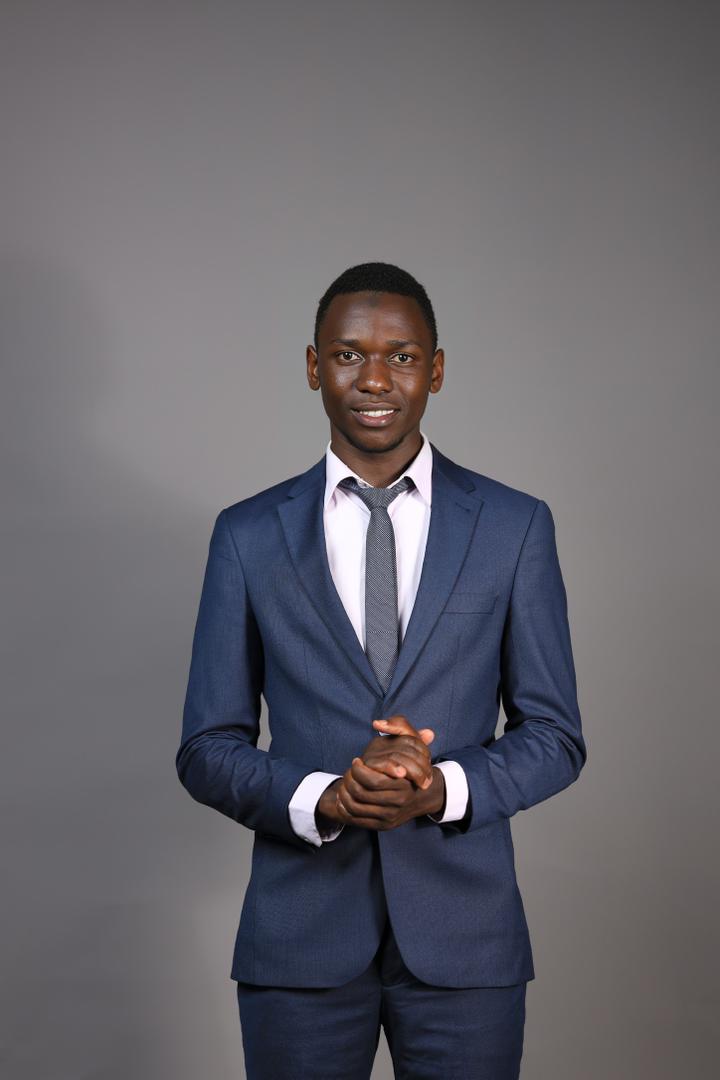
Ssenkima Ashiraf
Join the Conversation
The question of leadership succession is universal. Whether you're running a startup with five employees or a multinational corporation with 160,000, the principles are the same: plan early, groom carefully, and build systems that outlast individuals.
What does succession planning look like in your organization? Are you building a company that can thrive without you? Share this article with a fellow founder who needs to hear this message. Join the conversation using #BuildSmartAfrica. And if you want more insights on building organizations that last, subscribe to the BuzTip newsletter.