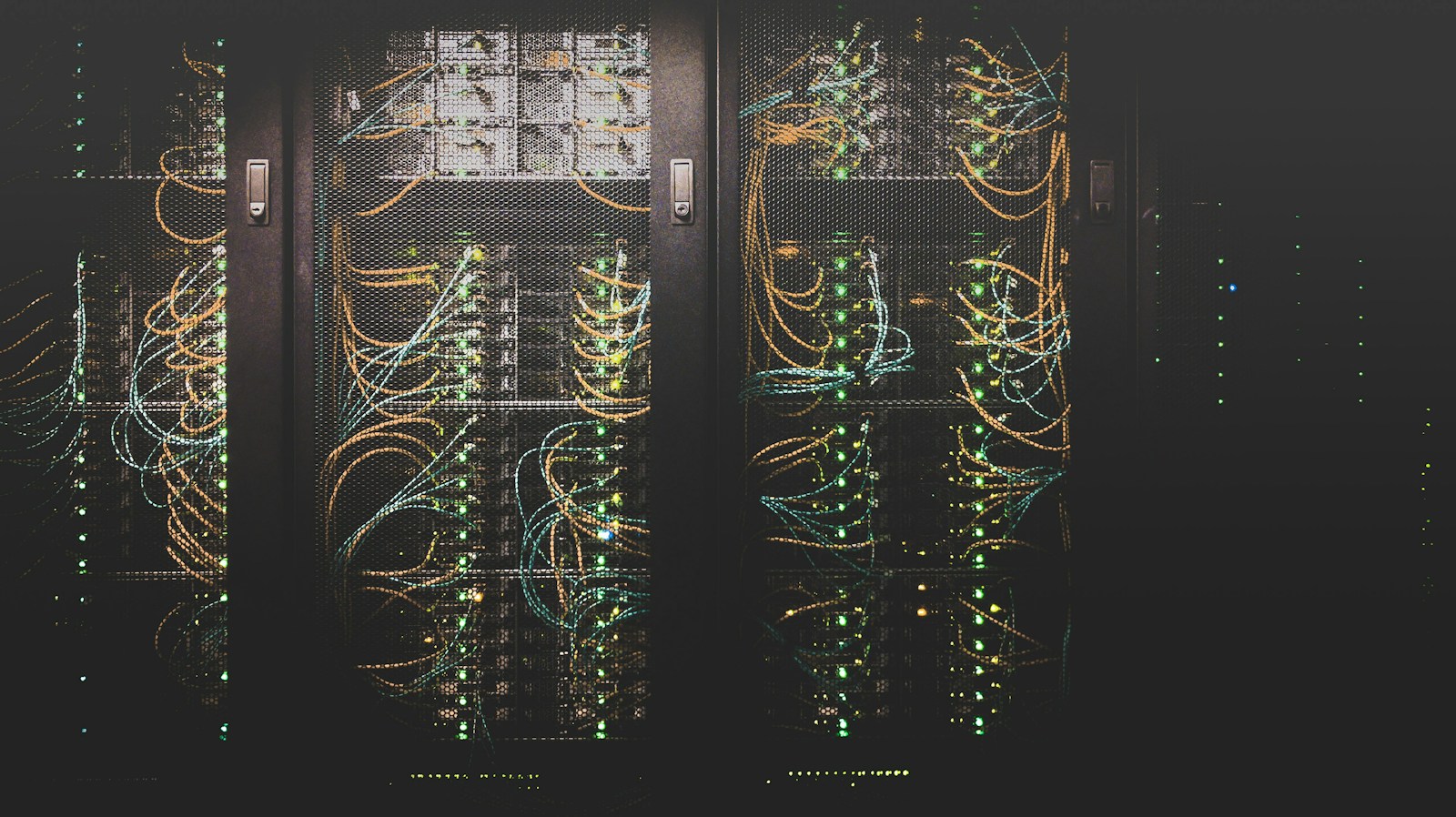

In today’s world, wars are no longer just fought with weapons on physical battlefields. They are fought with data packets, infrastructure, and control over the internet itself. The nature of conflict has transformed so dramatically over the past two decades that the lines between military engagement and digital disruption have blurred almost completely. When a nation decides to attack another nation today, the first shots are often not missiles or bullets — but lines of code sent across fibre optic cables to disrupt communications, disable defences, and create confusion before any physical confrontation begins.
As tensions rise between Iran, Israel, and the United States, developers across the world — including in Africa — are beginning to ask a question that would have sounded paranoid five years ago but now feels like basic risk management. Will my app still run if something goes wrong globally? Will my users in Nairobi, Lagos, or Cape Town still be able to reach my servers if undersea cables are cut or routing tables are poisoned by state-sponsored hackers? Will my Firebase project still be accessible if Google becomes a target in a cyber war it never asked to be part of?
This is not fear. This is engineering awareness.
The developers who survive and thrive in the coming years will not be the ones who pretend that digital warfare does not affect them. They will be the ones who understand the risks, plan for contingencies, and build systems that can bend without breaking when the global internet comes under pressure.
What Modern Cyber Warfare Really Means

Cyber operations run 24/7. There is no peacetime in digital warfare.
Cyberwarfare is no longer a theoretical concept discussed only in academic papers and military strategy documents. It is real, it is happening right now as you read these words, and it is escalating faster than most civilians understand. At its simplest level, cyberwarfare means using digital attacks to disrupt the systems, economies, or national infrastructure of an adversary — attacking servers until they crash, disrupting networks until legitimate traffic cannot get through, taking down power grids so hospitals lose electricity, and manipulating data so financial systems show incorrect balances.
Home to the world's largest cyber army. US Cyber Command and the NSA employ thousands of elite hackers with budgets running into the billions. Their leaked weapons have spread globally, arming nations and criminal groups alike.
Home of the legendary Unit 8200, whose alumni founded some of the world's top cybersecurity companies. Israel deploys surgical, creative cyber operations as a central pillar of national security.
An asymmetric cyber power that compensates for limited sophistication with persistence, patience, and willingness to cause real-world harm — linking attacks to Saudi oil facilities, US banks, and Israeli water systems.
What makes the current situation particularly dangerous is that all three nations are already engaged in what cybersecurity professionals call persistent engagement — constantly attacking each other, 24 hours a day, 365 days a year, probing networks and testing defences. The digital battlefield is always active. The question is not whether there will be cyber attacks. The question is when low-level skirmishes escalate into something that affects civilian infrastructure.
The history of cyber warfare shows that escalation happens quickly and unexpectedly. The NotPetya attack of 2017 started as a Russian operation against Ukrainian companies. Within days, that carefully planned operation had spread across the entire world, causing more than $10 billion in damage to companies that had nothing to do with the Russia–Ukraine conflict. The lesson is clear: when nations fight in cyberspace, the damage is far broader than anyone intended.
Your App Is Global Even When You Think You Are Local

Your Firebase project in Kampala runs on servers in Iowa. Every API call you make crosses an ocean.
Most developers today do not think about where their code actually runs. They sign up for Firebase with a few clicks, spin up a VPS on DigitalOcean, and push containers to AWS — never looking at the physical location of the machine. This abstraction is by design. But this invisibility creates a dangerous blind spot.
Your app is not just your code. Your app is part of a global infrastructure web that includes:
- Undersea cables running across ocean floors
- Routing systems operated by hundreds of different companies
- Data centres consuming enough electricity to power small cities
- Power grids that can fail during heatwaves or storms
- Human beings who make mistakes or have malicious intentions
The developer building a school management system in Kampala probably does not think about the fact that her Firebase database is replicated across data centres in Iowa and South Carolina. The fintech startup in Lagos building on AWS might not understand that their primary database region is the same US East data centre in northern Virginia that every major government agency and Fortune 500 corporation relies on. When that data centre has problems, everyone has problems.
This global dependence means that even if all your users are in one African country — even if you have no international ambitions — your app can still be affected by a conflict happening thousands of kilometres away. The modern internet was designed for resilience, but it was not designed to withstand coordinated attacks from nation-state adversaries who have unlimited budgets, unlimited patience, and no regard for collateral damage.
Why the Internet Can Break Anywhere
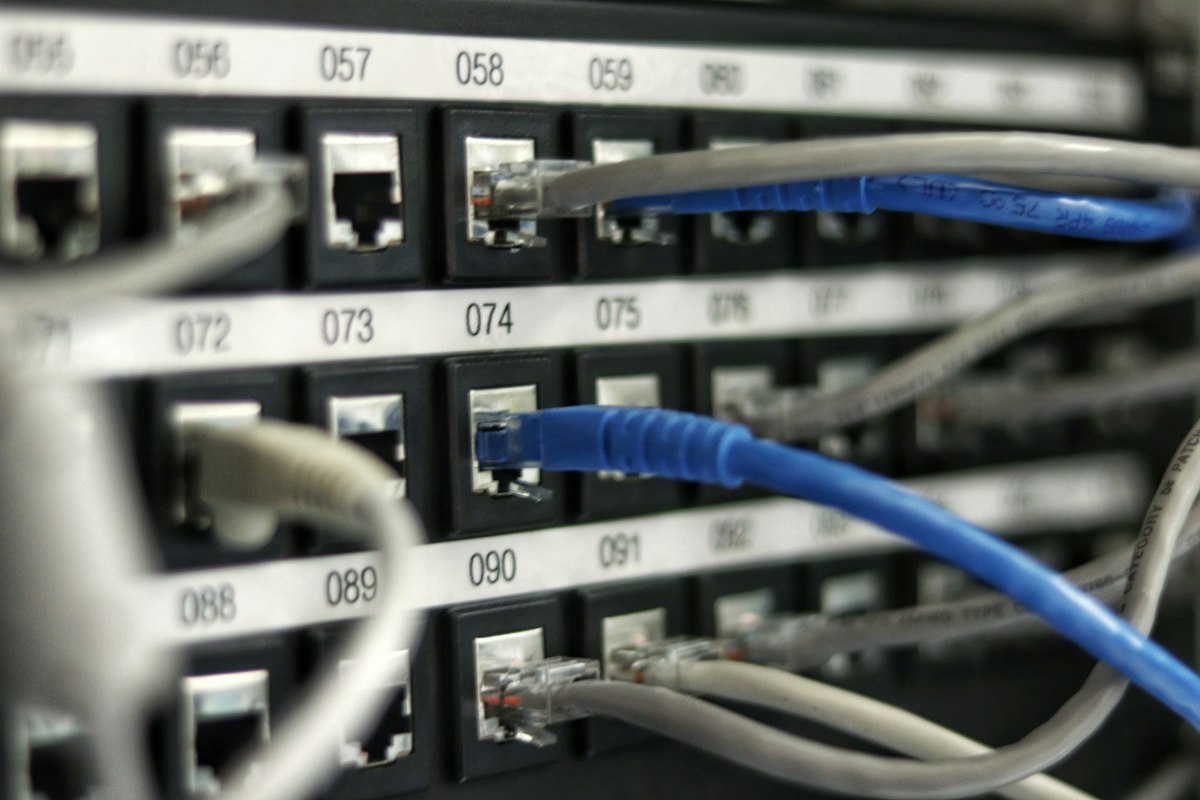
Hundreds of thousands of kilometres of cables on the ocean floor carry almost all intercontinental internet traffic — about as thick as a garden hose.
The internet is often described as a cloud — something ethereal and untouchable. But this metaphor is dangerously misleading. The internet is a physical system of astonishing complexity and surprising fragility.
The undersea cable system is particularly vulnerable and invisible to most developers. These cables have been cut accidentally many times — and could be cut deliberately:
| Cable Cut Event | Year | Impact |
|---|---|---|
| Asia America Gateway cut | 2009 | Severe internet degradation across Middle East & India for days |
| SEA-ME-WE 4 cut near Egypt | 2008 | Europe–Asia traffic slowed for weeks |
| Africa Coast to Europe cut | 2020 | Several West African countries disrupted for days |
The cables connecting Africa to the rest of the world land in only a handful of locations. ACE, WACS, EASSY, and SEACOM serve the entire continent. If any of these cables are cut or disrupted, your traffic to international cloud providers will be rerouted through longer, slower paths — increasing latency and packet loss. If multiple cables are cut simultaneously, your traffic may not get through at all.
What Could Actually Happen to Your VPS and Firebase

Every server is a physical object inside a building that can lose power, connectivity, or security.
Let us be practical about what digital warfare actually means for the developer who has built an application on Firebase, deployed a backend on a VPS, or stored customer data in AWS. The risks fall into several distinct categories:
APIs become slow, requests timeout, real-time features feel sluggish. Could last hours or days while network operators implement countermeasures.
Cloud providers operating under US law may be required to block access from certain regions. Your Firebase project could be restricted because of where your users are located — not because you violated anything.
Determined nation-state adversaries can find vulnerabilities in cloud software, launch DDoS attacks that overwhelm even the largest networks, or exploit zero-day vulnerabilities. Recovery can take days.
If you deployed only in one region and that region experiences problems, your entire application becomes completely unavailable. No fallback, no backup — just errors.
International payment systems can be disrupted. Your credit card might stop working for cross-border payments. You could be locked out of your infrastructure because you cannot pay your bill.
Governments may demand access to data stored in their jurisdiction. They may seize servers physically. If you have not thought about where your data lives, you are taking significant risks.
How Cyber Attacks Actually Happen

Sophisticated attackers spend months in reconnaissance before a single destructive action is taken.
Most cyber attacks follow a predictable four-phase pattern that developers should understand:
Scanning for vulnerabilities, studying social media, searching for leaked credentials on the dark web. This phase can take weeks or months for a sophisticated attacker.
Phishing emails, exploiting unpatched vulnerabilities, using stolen credentials, or compromising a third-party vendor. The initial access is often through a low-value system that is not well protected.
Moving laterally across the network, compromising additional systems, stealing credentials, disabling security tools and logging systems to avoid detection.
Encrypting files, exfiltrating data, wiping systems, or triggering payloads that cause physical damage. The execution phase is often the shortest — sometimes taking only minutes to cause damage that takes months to repair.
Why Are People Saying Firebase Is Shutting Down

Firebase is not shutting down. But the rumours reveal a deeper truth every developer needs to hear.
The rumours stem from Google's ongoing product restructuring — removing or replacing certain Firebase tools as part of a larger AI-driven platform shift. This is normal in the technology industry. Only some tools are being removed or replaced, not the entire platform. Core services — authentication, Firestore, Realtime Database, Cloud Functions, Cloud Messaging, and Hosting — remain fully supported.
However, the Firebase discussion points to a deeper truth that developers need to confront honestly. Your backend is not under your control. When you depend on US cloud providers and Google infrastructure, you inherit:
- Their outages when a data centre loses power
- Their policies when they change terms of service or raise prices
- Their geopolitical exposure when sanctions or cyber attacks affect their ability to serve customers
You have no vote in these decisions. You are simply along for the ride.
The Real Risk Is Centralization

The concentration of cloud infrastructure in a small number of geographic locations creates systemic risk that most developers have never considered.
Almost all of Africa’s tech growth has been built on infrastructure that African developers do not control, do not own, and cannot influence. African developers have become experts at using global platforms, but they have not built the alternative infrastructure that would allow them to operate independently if those platforms become unavailable.
The geopolitics of cloud infrastructure are shifting rapidly:
| Region | Action |
|---|---|
| China | Built its own isolated internet with the Great Firewall, blocking access to global services |
| Russia | Implemented laws requiring local data storage; tested full disconnection from the global internet |
| India | Demanded social media companies store user data locally; required government access to encrypted messages |
| European Union | Implemented GDPR affecting cross-border data transfers |
| Africa | Largely passive — accepting whatever global providers offer |
When the digital war between Iran, Israel, and the United States escalates, African applications built on US infrastructure could become collateral damage — not because anyone targeted Africa, but because Africa hitched its digital future to infrastructure it does not control.
The Future of Cybersecurity and Global Systems

AI-powered attacks can try millions of password combinations in the time it takes a human hacker to drink a cup of coffee.
The future of cybersecurity is shifting toward more complex threats and more sophisticated defences at a speed that is difficult to comprehend. AI is already being used both to launch attacks and to defend against them, and this arms race is accelerating rapidly. AI-powered attacks adapt in real time, find vulnerabilities faster than human hackers, and launch coordinated strikes across multiple vectors simultaneously.
We are moving into an era of what experts call the splinternet — a fragmented internet where connectivity between regions cannot be taken for granted. For African developers, this fragmentation presents both risks and opportunities:
Global platforms you depend on may become less reliable or less accessible as geopolitical tensions increase.
There is growing demand for local infrastructure, local cloud providers, and local expertise. Developers who understand fragmented networks will be extremely valuable.
What Developers Should Expect in the Coming Months and Years
| Timeframe | What to Expect |
|---|---|
| Short Term (now–6 months) | Firebase remains stable. Iran–Israel–USA tensions continue to simmer but are unlikely to escalate into full-scale cyber warfare affecting civilian infrastructure. Risk is elevated but manageable. |
| Medium Term (1–2 years) | More Google product changes as the company restructures around AI. Occasional cloud outages as providers struggle with increasing attack volumes. Higher risk of cyber escalation if diplomatic efforts fail. |
| Long Term (3–5 years) | Fragmented internet with reduced global connectivity. Regional cloud systems operating independently of US-controlled infrastructure. Developers who adopt resilient architectural patterns will thrive. |
What You Should Do to Protect Your Applications Right Now

Resilient architecture is not paranoia. It is professional engineering.
Do not depend on one provider only, no matter how reliable they seem. Build your application so that if one provider experiences problems, you can shift traffic to another with minimal downtime. Ask yourself: if Firebase went down for a week, would my business survive?
Deploy across multiple geographic regions — not all controlled by the same geopolitical powers. Consider African cloud providers like Liquid Telecom, Teraco, or Rack Centre that keep data on the continent.
Have a documented backup plan for every service. Know exactly how you would move authentication, database, and file storage to a different provider if your current one became unavailable tomorrow. Practice these migrations periodically.
Separate authentication from database from hosting from file storage from analytics. When these components are loosely coupled, you have genuine options. You can replace any single piece without rewriting the entire application.
Know where each provider is headquartered, what laws they operate under, and their government relationships. A US-headquartered provider is subject to US sanctions and the Cloud Act. Choose providers whose risk profile matches your tolerance.
Design your user experience to work even when backend services are slow, unreliable, or completely unavailable. Cache data aggressively. Implement offline capabilities. Show meaningful error messages.
Open accounts, understand their APIs, deploy test applications, and run small workloads. The worst time to learn a new provider is during an emergency when your primary provider is already down.
Set up alerts for increased latency, error rates, and unusual traffic patterns. Your monitoring systems will often detect problems before official announcements or news coverage, giving you precious hours to respond.
Have templates ready for status pages, social media posts, and email updates. Practice using these communication channels under pressure. Transparency builds trust, and trust is your most valuable asset when things are breaking.
For the most critical parts of your application, consider running your own servers in a local data centre or office. Expensive and complex, but it provides a level of control that no cloud provider can match.
A Practical Example of Resilient Architecture

Resilience comes from options. When you have multiple ways to accomplish each function, the failure of any single provider cannot bring down your entire application.
Imagine you are building a delivery application for a city in East Africa. Your users need to order food, track drivers in real time, and make mobile money payments.
- Everything on one Firebase project
- Authentication, realtime tracking, orders, notifications — all one provider
- Easy to build, beautiful under normal conditions
- But if Firebase has problems → entire application stops
- Users cannot log in, drivers cannot see orders
- Auth via Auth0 or Supabase, with self-hosted fallback (Keycloak)
- Realtime location via Firebase primary + WebSocket backup on different cloud
- Order storage replicated across multiple providers (Litestream)
- Push notifications via FCM primary + SMS fallback for critical messages
The key insight is that resilience comes from options. When you have multiple ways to accomplish each function, the failure of any single provider does not bring down your entire application. Your code becomes more complex, your costs go up — but you gain the ability to survive disruptions that would completely destroy a simpler architecture.
Why African Developers Have a Unique Opportunity

Africa’s tech ecosystem is growing rapidly — and the window to build local digital infrastructure is open right now.
Because African cloud infrastructure is less developed than in North America, Europe, or Asia, there is less legacy to overcome and more room for innovation. Because African developers have always had to deal with unreliable infrastructure, they have developed skills in building resilient systems that developers in more stable regions have never needed to learn.
The developers who will succeed in the coming decade are not those who build the most sophisticated applications on the most advanced platforms. They are those who build applications that work when networks are slow, when servers are unreliable, and when the global internet is under pressure.
The opportunity is to build the next generation of African digital infrastructure — not just applications that run on infrastructure built by others, but the infrastructure itself: local cloud providers, local data centres, local payment systems, local identity solutions. The global providers are not going to build this because they do not understand the market well enough. That creates space for local entrepreneurs to step in and build something better.
The Geopolitical Landscape and What to Watch
To be an infrastructure-aware developer in 2026, pay attention to these key indicators:
- 📡 Increased cyber retaliation rhetoric from US Cyber Command, Israeli intelligence, or Iranian military leaders — statements that signal impending operations
- 💥 Major cyber attacks attributed to any of the three nations — watch not just the attack but how governments respond
- 📜 New sanctions or trade restrictions affecting technology companies, particularly from the Office of Foreign Assets Control
- 📢 Cloud provider announcements about service changes, region shutdowns, or security incidents — subscribe to their status pages
- 🌍 African policymaker discussions about data sovereignty and digital independence — these create both compliance requirements and business opportunities
- 📈 Your own metrics — increased latency, error rates, and unusual traffic patterns are your earliest warning system
A Final Word for Developers Building the Future

The developers who succeed will be the ones whose applications keep working when everything else stops.
The Iran–Israel–USA tensions may not shut down your application today or tomorrow. The immediate risk is relatively low for most applications. But these tensions reveal something deeper that every developer needs to understand.
The internet is controlled by a few powerful regions, and when those regions shake, your application feels it — even if you are building in Africa for African users and have no connection to global conflicts. The decisions that affect your application will be made in Washington, Tel Aviv, and Tehran — not in Nairobi, Lagos, or Cape Town.
Code written in Kampala runs on servers in Virginia and serves users in Nairobi through undersea cables that pass through the Red Sea near Yemen. Every part of that chain can be attacked, disrupted, or degraded. The developer who understands this reality and builds accordingly is not being paranoid. They are being professional.
If you are building in Africa, the future belongs to developers who build resilient, portable, and independent systems. Not just applications that work under ideal conditions, but applications that survive uncertainty.
Build systems that bend without breaking. Build systems that fail gracefully when they must fail. Build systems that can be moved, replicated, and reconfigured when conditions change. Build systems that serve your users no matter what happens in the world. That is the challenge of our time, and it is a challenge worth rising to meet.
About the Author
Ssenkima Ashiraf is the Founder and Marketing Director at BuzTip, a platform helping African businesses acquire their first customers online. He writes extensively on digital sustainability, technology economics, cloud infrastructure risks, and the economics of digital services in emerging markets. A strong advocate for pragmatic, infrastructure-aware digital strategies that prioritise traction over trends.
Join the Conversation
This article is the beginning of a conversation, not the end. If you are a developer who has thought about these issues, if you have experience with infrastructure resilience, if you have questions about how to apply these principles to your specific application — we want to hear from you.
Share this article with another developer who needs to understand how geopolitical tensions can affect the applications they build and maintain every day. The more developers understand these risks, the more resilient the entire ecosystem becomes.
Follow BuzTip for more insights on building technology businesses that serve African markets effectively while surviving the uncertainties of global digital infrastructure.
Published on 29 March 2026
Copyright 2026 BuzTip. All rights reserved. This article may be shared with attribution but may not be reproduced in full without permission.