Why Supporting Quran Apps Matters: The Hidden Cost of Free Islamic Technology
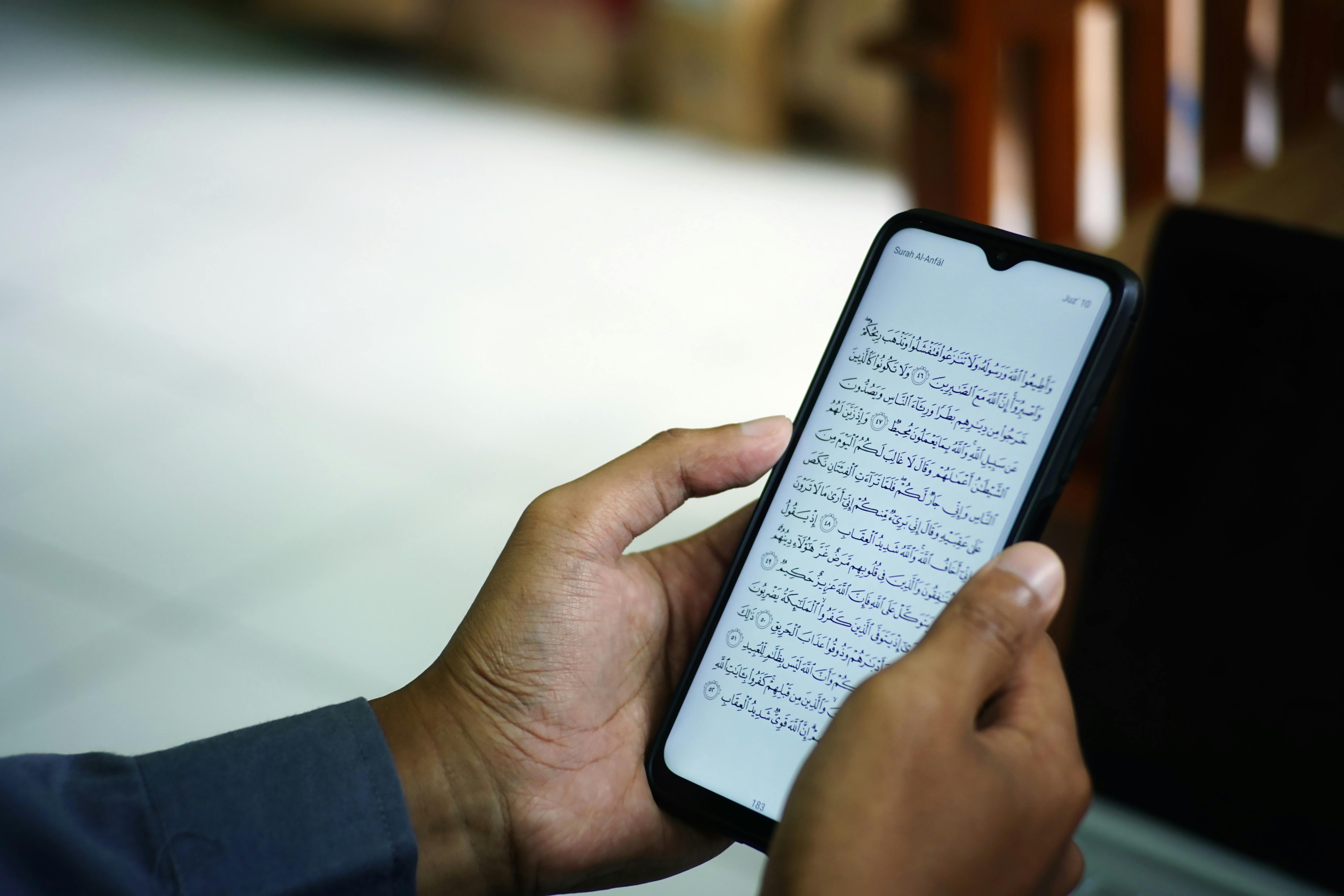
Millions of Muslims open a Quran app every single day. Before Fajr prayers, during commutes, in quiet moments of reflection, and before sleeping at night, the digital Quran has become an inseparable companion for believers around the world. They read verses, listen to soulful recitations from their favorite Qaris, bookmark passages that speak to their hearts, and reflect on the words of Allah SWT in moments of solitude.
But very few users ever stop to ask a question that determines whether these apps will exist tomorrow, next year, or a decade from now. Who is actually paying to keep this app running?
Free Islamic technology is not free to build. It is not free to maintain. And contrary to what millions of users assume, it does not run on miracles. It runs on servers, developers, and infrastructure that all cost real money every single month.
The disconnect between how much Muslims use digital Islamic tools and how little they support them financially has created a quiet crisis in Islamic technology. This crisis does not make headlines. It does not trend on social media. But it determines which apps survive, which apps compromise their values, and which apps eventually disappear entirely.
The Invisible Infrastructure Behind Every “Free” Quran App
When a user downloads a Quran app from the Google Play Store or the Apple App Store, they see only what matters to them: a clean interface, beautiful typography, smooth recitation playback, and useful features like bookmarks and translations. The experience feels simple because thousands of hours of work have made it feel that way.
Behind that simplicity lies a complex technical infrastructure that most users never consider.
Every Quran app requires cloud servers to host its database. These servers store user accounts, bookmarks, reading progress, and preferences. When you bookmark a verse on your phone and later open the app on your tablet, that synchronization happens because cloud servers are working in the background to keep your data consistent across devices. These servers run 24 hours a day, 365 days a year, and the electricity that powers them, the bandwidth that connects them, and the technicians who maintain them all cost money.
The audio recitations that bring the Quran to life must be stored somewhere accessible. High-quality recitations from renowned Qaris consume enormous amounts of storage space. Multiple reciters like Mishary Rashid Alafasy, Abdul Rahman Al-Sudais, and others require separate audio files. Different quality levels from 32kbps for slow connections to 320kbps for high-fidelity listening multiply these storage requirements further. Each audio file must be delivered quickly and reliably to millions of users across different devices and network conditions, which means content delivery networks must be employed to ensure fast loading times regardless of where the user is located in the world.
Application Programming Interfaces, or APIs, form the connective tissue of modern apps. When your app checks for updated translations, fetches new recitation files, or verifies your subscription status, API calls are being made in the background. Each call costs money because it requires server processing time and bandwidth. Each response consumes data transfer that someone must pay for. Each user interaction generates dozens of these behind-the-scenes requests, and when an app has hundreds of thousands or millions of users, these costs add up very quickly.
Security updates are not optional. When operating system vulnerabilities are discovered, apps must be patched immediately to protect user data. When new versions of Android and iOS roll out, apps must be tested and updated to maintain compatibility. A single security breach in a Quran app would be catastrophic, not just for users’ personal data but for the reputation of Islamic technology as a whole. Developers must constantly monitor for threats, release patches, and ensure that the app remains secure against evolving risks.
Bug fixes after operating system updates represent an ongoing cost that users never see. When Apple releases iOS 17, every Quran app must be tested to ensure it still works correctly. Features that relied on older system APIs may break. New permissions models may require code changes. Screen sizes and resolutions evolve, requiring layout adjustments. These are not one-time costs but recurring expenses that continue as long as the app exists.
Developer time and labor is the largest hidden cost of all. The programmers who build and maintain Quran apps are professionals with families to support and bills to pay. They are not volunteers working in their spare time, although some start that way. They are skilled engineers who could be earning competitive salaries building banking apps, e-commerce platforms, or entertainment software. When they choose to build Islamic technology instead, they are making a conscious decision to serve the Ummah, but that decision does not eliminate their need to earn a living.
Customer support handling user issues consumes countless hours that users never see. For every user who successfully uses a Quran app without problems, there are others who encounter issues. Installation failures on specific devices. Synchronization problems between phone and tablet. Audio playback glitches on certain Android versions. Translation discrepancies that need investigation. Account recovery requests from users who forgot their passwords. Each support ticket requires human attention, and that human attention costs money.
Ongoing compliance with app store policies represents a bureaucratic cost that many users do not consider. Google and Apple frequently update their store policies, requiring app updates to maintain compliance. Privacy policy changes must be reflected in the app. New data collection restrictions may require architectural changes. Apps that fail to maintain compliance risk being removed from stores entirely, cutting off access for millions of users.
Even a modest app with tens of thousands of users can incur significant monthly hosting expenses. A simple calculation reveals the scale. If an app has 50,000 monthly active users, and each user generates 100 server requests per month, that is 5 million requests requiring processing. If audio streaming averages 10 minutes per user per month at reasonable quality, that is 500,000 minutes of audio delivery requiring bandwidth. If each user stores an average of 20 bookmarks with associated metadata, that is 1 million database records requiring storage and backup.
If the app grows, these costs scale proportionally. An app with 500,000 users faces ten times the infrastructure costs. An app with 5 million users faces one hundred times the costs. This scaling is not linear in practice because volume discounts exist, but the fundamental principle remains unchanged: more users mean more costs.
Usage is free for the person holding the phone. Infrastructure is not free for the person holding the servers.
Why Many Quran Apps Add Advertisements
When donation rates remain low month after month, and when premium upgrade conversions fail to materialize, developers eventually face an unavoidable choice. They can either shut down the app, watch it decline due to lack of maintenance, or turn to the only scalable monetization model available to digital products: digital advertising.
Programmatic ad networks automatically fill ad slots inside apps through complex real-time bidding systems. When you open a free app and an ad appears, that ad was placed there through an automated auction that happened in milliseconds. Advertisers bid for the opportunity to show you their message based on what they know about you, your location, your device, and your behavior.
These systems optimize ruthlessly for specific outcomes. They seek the highest bidder for each impression. They pursue the highest revenue per thousand impressions. They continuously refine user targeting to improve performance. They do not optimize for religious sensitivity. They do not consider whether an ad is appropriate for a Quran app. They do not evaluate whether a message conflicts with Islamic values. They simply match available ad inventory with willing advertisers through algorithmic efficiency.
This is why users sometimes see inappropriate ads in religious apps. A user in Egypt opens a Quran app for Maghrib prayer and sees an ad for a dating service. A user in Indonesia listening to Surah Yaseen encounters a promotion for interest-based loans. A user in Morocco bookmarking verses is shown gambling advertisements. These occurrences are not because the developer intended to desecrate the Quran app experience. They happen because the ad ecosystem is revenue-driven and operates at machine speed without human judgment.
If there is no community support providing sustainable revenue, the algorithm fills the gap with whatever generates the highest return. The developer faces an agonizing choice: accept algorithm-driven ads that may be inappropriate, or watch the app die from lack of funding. Neither option serves the Ummah well, but one option at least keeps the app running.
Some developers attempt to implement ad filters and content restrictions, but these are imperfect tools. Ad networks promise brand safety, but their definitions of appropriate content rarely align with Islamic standards. An ad that is merely “non-offensive” by general internet standards may still promote activities that Muslims should avoid. The filtering tools available simply are not designed for Islamic requirements.
Other developers try to manually review and approve ads, but this approach does not scale. When an app has millions of users and serves thousands of ads per minute, human review becomes impossible. The economics of manual ad approval would require a team of reviewers that the app cannot afford precisely because it relies on advertising in the first place.
The presence of ads in Quran apps represents a failure of community support. It is not the first choice of developers. It is not what they dreamed of when they built the app. It is what happens when the alternative is shutting down entirely.
The Donation Gap: Why Users Don’t Pay
Most Quran apps include some form of funding request. A “Support Us” button in the settings menu. A one-time donation option during onboarding. A small premium upgrade that removes ads and adds features. A simple request for contribution displayed occasionally to active users.
Yet only a tiny fraction of users actually contribute. Industry data across various app categories suggests that typical donation conversion rates for free apps range from 0.5 percent to 2 percent. For religious apps specifically, the numbers are often lower because users assume that Islamic work should be funded by divine provision rather than human contribution.
Why do so few users donate when they clearly value the app enough to use it regularly?
Users assume the app is cheap to maintain. They look at the polished interface and think, “This is just software. How much could it possibly cost?” They have no visibility into server bills, developer salaries, or the ongoing costs of security updates. The app looks finished, so they assume the work is finished. They do not understand that software is never finished, that maintenance continues forever, and that every day the app runs, someone is paying for it.
They believe someone else will donate. This is the classic bystander effect applied to digital funding. Every user thinks, “There are millions of Muslims in the world. Surely among all those users, enough people are donating to keep this running.” The problem is that every user has this exact thought simultaneously, and collectively they all wait for others to carry the burden. The result is that nobody carries it, or too few carry it, and the app struggles.
They are accustomed to “free” internet services. The entire consumer internet has trained users to expect free access to virtually everything. Google searches are free. Facebook is free. YouTube is free. Wikipedia is free. Email is free. This global expectation of free digital services has created a mindset where paying for software feels abnormal, even when that software provides daily spiritual value that users genuinely appreciate.
The donation request is often ignored through habituation. Users see the “Support Us” button so frequently across so many apps that it becomes visual noise. They have been conditioned to tune out funding requests just as they tune out banner ads. The request becomes part of the background environment, noticed but not processed, seen but not acted upon.
This creates a structural imbalance that threatens every Islamic app eventually. High usage generates ongoing costs. Low contribution fails to cover those costs. Rising operational expenses outpace the small trickle of donations. The gap between what the app costs to run and what users contribute grows wider over time.
That imbalance pushes developers inexorably toward advertising. Not because they want ads in their apps, but because the alternative is watching their work disappear. They built the app to serve the Ummah. If advertising is the only way to keep serving, they accept advertising despite its flaws.
The Economic Contradiction in User Expectations
Many users express strong opinions about monetization in Islamic apps. They post reviews saying, “Why are there ads in a Quran app? This is disrespectful.” They comment on social media, “Religious apps should not show ads. They should be pure.” They share screenshots of inappropriate ads with outrage and demand that developers fix the problem immediately.
But at the same time, these same users do not subscribe to ad-free versions. They do not donate to support the app. They do not sponsor the development through monthly contributions. They demand an ad-free experience while refusing to fund the infrastructure that makes ad-free possible.
You cannot demand ad-free infrastructure while refusing to fund it. This is not a matter of opinion or preference. It is a matter of economic reality. Servers do not run on good intentions. Developers do not work for prayers. Bandwidth is not delivered by angels. The physical infrastructure of the internet costs money, and that money must come from somewhere.
Digital tools follow economic laws just like physical tools do. If you want a physical Quran printed on high-quality paper with beautiful calligraphy, someone must pay the printer. If you want a mosque with air conditioning and clean carpets, someone must pay the utility bills. If you want a digital Quran app with fast performance and no advertisements, someone must pay the server costs.
The only difference is that digital infrastructure is invisible, so users forget it exists. They see the app on their phone and think of it as a thing they possess, not a service that must be continuously maintained. They do not realize that the app they downloaded three years ago is still running on servers that have been paid for every single month since then.
When users complain about ads while refusing to pay, they reveal a fundamental misunderstanding of how digital products work. They want the benefits of paid infrastructure without the costs. They want developers to work for free. They want servers to run on donations from other people. They want someone else to carry the burden while they enjoy the results.
This contradiction is not unique to Islamic apps. It appears across all categories of free digital services. But it is particularly troubling in the Islamic context because Muslims are commanded to support good works, to ease the path of knowledge, and to contribute to causes that benefit the Ummah. When Muslims use Islamic apps daily but refuse to support them financially, they are neglecting a responsibility that their own faith emphasizes.
A Community Responsibility Question
Supporting a Quran app is not just a financial transaction between a user and a developer. It is a digital-era continuation of the Islamic tradition of supporting knowledge distribution. The forms have changed, but the underlying principle remains identical.
In traditional Islamic settings throughout history, communities funded mosques through ongoing contributions. Wealthy donors printed physical Qurans and distributed them for free. Benefactors established waqf endowments to fund schools and libraries permanently. The community understood that religious infrastructure required maintenance, and they accepted responsibility for providing it.
Today, Quran apps are part of that same infrastructure. They are digital libraries that fit in your pocket. They are masjids that never close, always open for prayer and reflection. They are madrasas that teach the Quran to millions who cannot access physical teachers. They are da’wah tools that spread the message of Islam to curious non-Muslims exploring the faith.
But digital libraries still require maintenance. Digital masjids still need utility payments in the form of server bills. Digital madrasas still need teacher salaries in the form of developer compensation. The forms have evolved, but the underlying economics have not changed.
When a Muslim uses a Quran app daily for years without ever contributing to its support, they are benefiting from community infrastructure without participating in its maintenance. They are consuming a public good without helping to produce it. They are taking from the Ummah without giving back.
This is not a judgment on individual users who may genuinely cannot afford to contribute. Islam recognizes that not everyone has financial capacity, and the faith provides other ways to support good works through dua, through sharing, through positive word of mouth. The concern is for the millions of users who could contribute a small amount but choose not to, who have the means but not the motivation.
If every user who can afford even one dollar per month contributed that amount, the landscape of Islamic technology would transform overnight. Apps would become sustainable. Developers would focus on quality rather than survival. Innovation would accelerate. The Ummah would own its digital infrastructure rather than renting it from commercial interests.
What Would Change the System?
The mathematics of sustainable Islamic technology are surprisingly achievable. If even 5 to 10 percent of active users contributed a small monthly amount, most Quran apps could transform their business models completely.
With sustainable community funding, apps could remove ads entirely. Users would never again encounter inappropriate advertisements while reading Quran. The spiritual experience would remain pure, untainted by commercial interruptions that distract from reflection and remembrance of Allah.
Developers could improve app quality continuously rather than merely maintaining existing features. They could invest in better recitation engines with smoother playback and more reliable streaming. They could add translations in more languages, reaching Muslims who previously could not access the Quran in their native tongues. They could develop better search capabilities, helping users find verses by topic, keyword, or thematic connection.
Security could be strengthened through dedicated attention rather than occasional patches. User data would be better protected. Privacy would be enhanced. The app would become more trustworthy, encouraging deeper engagement and more frequent use.
Instead of reacting to ad complaints and putting out fires, developers could focus on what they actually want to do: creating the best possible tool for engaging with the Quran. They could innovate, experiment, and push boundaries. They could build features that users have not even imagined yet.
The difference between survival mode and innovation mode is funding. When developers worry every month about whether they can pay the server bill, they cannot think creatively about the future. When they have reliable community support, they can dream bigger and build better.
This transformation does not require enormous contributions from wealthy donors. It requires consistent small contributions from many users. A dollar per month from 10,000 users is $120,000 per year. That is enough to support a small team, maintain infrastructure, and invest in improvements. A dollar per month from 100,000 users is $1.2 million per year. That is enough to build a world-class Islamic technology organization serving millions of users with excellence.
The Bigger Issue: Muslim Tech Sustainability
This challenge extends far beyond Quran apps. It reflects a larger pattern in Muslim technology initiatives across the digital landscape.
Islamic podcast networks struggle to survive because listeners expect free content but do not donate. Halal food finding apps face ongoing costs that users do not cover. Muslim social networking platforms battle server bills while users demand more features. Prayer time applications with accurate calculations require data sources that cost money. Islamic learning platforms with qualified teachers need to pay those teachers.
Across the board, Muslim technology initiatives struggle with sustainability because users expect free access but do not support financially. The pattern repeats endlessly. A passionate founder builds something valuable for the Ummah. Users adopt it enthusiastically. The founder pours in personal savings and countless hours. Eventually the money runs out. The founder burns out. The project declines or dies. Users complain about losing a service they loved but never supported.
If this pattern continues, the consequences will be severe. Developers who might have built Islamic technology will choose other fields where their work is valued financially. Existing apps will decline in quality as their creators move on to paying work. New innovations will never reach users because they cannot survive long enough to gain traction. Commercial ad systems will dominate religious spaces, controlling what Muslims see and how they engage with their faith.
The alternative is a conscious shift in how the Muslim community approaches digital infrastructure. Instead of treating Islamic apps as consumer products to be used for free, the community must recognize them as communal assets to be maintained collectively. Instead of expecting developers to work for the sake of Allah alone, the community must support them so they can focus on serving Allah without worrying about paying their rent.
Sustainable Islamic digital infrastructure requires active community participation. Not passive consumption. Not occasional duas without action. Not complaints about ads without willingness to fund alternatives. Active participation means contributing financially when possible. It means sharing apps with others who might contribute. It means providing feedback that helps developers improve. It means recognizing that digital tools are part of the Ummah’s infrastructure and treating them accordingly.
Understanding App Economics: Recommended Videos
To better understand why ads appear in Quran apps and how free apps sustain themselves, these video resources provide valuable context. Watching them will help you see the bigger picture of digital economics and why community support matters.
1. Monetising Islamic Content on YouTube
This video from Smile2Jannah discusses the balance between spreading beneficial Islamic content and monetising it responsibly. It explores ethical concerns, community perception, and the real challenges creators face when trying to sustain Islamic work online.
2. How Free Apps Make Money (Complete Monetization Guide)
This comprehensive guide explains how free mobile apps generate revenue through advertising, in-app purchases, and subscriptions. It helps clarify why ads are often necessary for sustainability and what alternatives exist.
3. In-App Advertising Explained (Monetization Overview)
A practical breakdown of how in-app advertising works, including ad networks, real-time bidding systems, and revenue models. This video demystifies the technology behind the ads you see.
4. How to Monetize an App (Beginner Guide)
An overview of different monetization strategies developers use to sustain free applications, from subscriptions to one-time purchases to advertising models.
Why These Videos Matter
Understanding the economics behind free apps helps explain why ads appear in religious apps, why donations are critical for ad-free experiences, and why sustainability requires community support rather than passive consumption. When users understand the system, they are far more likely to support ethical monetization models and contribute to the apps they value.
Final Thought: From Consumer to Participant
If you use a Quran app daily, or even weekly, take a moment to ask yourself an honest question. When was the last time you supported that app financially? When did you last contribute to its continued existence? When did you last treat it as something worth maintaining rather than something merely worth consuming?
Free access to the Quran through technology is a blessing that previous generations of Muslims could not imagine. The entire Quran available instantly on a device that fits in your pocket, with multiple translations, multiple reciters, and powerful search capabilities. This is not a small thing. It is a gift from Allah facilitated by human effort.
Sustainability requires responsibility. If the community values Islamic technology, it must help sustain it. Not through occasional guilt-driven donations after the developer announces they are shutting down. Not through complaints about ads without offering alternatives. Not through expecting others to carry the burden. Through consistent, conscious, committed participation in maintaining the infrastructure that serves the Ummah.
The next time you open your Quran app, before you read the verses, take a moment to look for the support option. Consider what the app would be worth to you if it disappeared. Consider how much you would pay to get it back. Then contribute something toward keeping it running. Even a small amount. Even once. Even today.
Because every app that serves the Quran is doing Allah’s work. And those who support that work share in its reward. The Prophet Muhammad SAW said, “Whoever guides someone to goodness will have a reward like the one who does it.” Supporting a Quran app is guiding millions to the words of Allah. There is no better investment in this world or the next.
About the Author

Ssenkima Ashiraf is the Founder and Marketing Director at BuzTip, a platform helping African businesses acquire their first customers online. He has written extensively on digital sustainability, technology economics, and the intersection of community values with business models. His work focuses on helping users understand the real costs behind the free services they depend on.
Ashiraf is a strong advocate for community-funded digital infrastructure and believes that sustainable technology requires active participation from those who benefit from it. He writes regularly about startup strategy, African tech ecosystems, and the economics of digital services in emerging markets.
You can reach him at [email protected] or follow his thoughts on technology and sustainability on Twitter.
Join the Conversation
This article is the beginning of a conversation, not the end. If you are a founder struggling with monetization, a user who wants to support Islamic technology, or someone thinking about these issues, we want to hear from you.
Share this article with someone who needs to read it. Comment on social media using #SupportIslamicTech. Email us with your thoughts, experiences, and questions. Subscribe to BuzTip for more insights on building sustainable digital services that serve communities rather than exploiting them.
Together, we can build an Islamic digital ecosystem that truly serves the Ummah for generations to come.
Published on 27 February 2026
© 2026 BuzTip. All rights reserved. This article may be shared with attribution but may not be reproduced in full without permission.