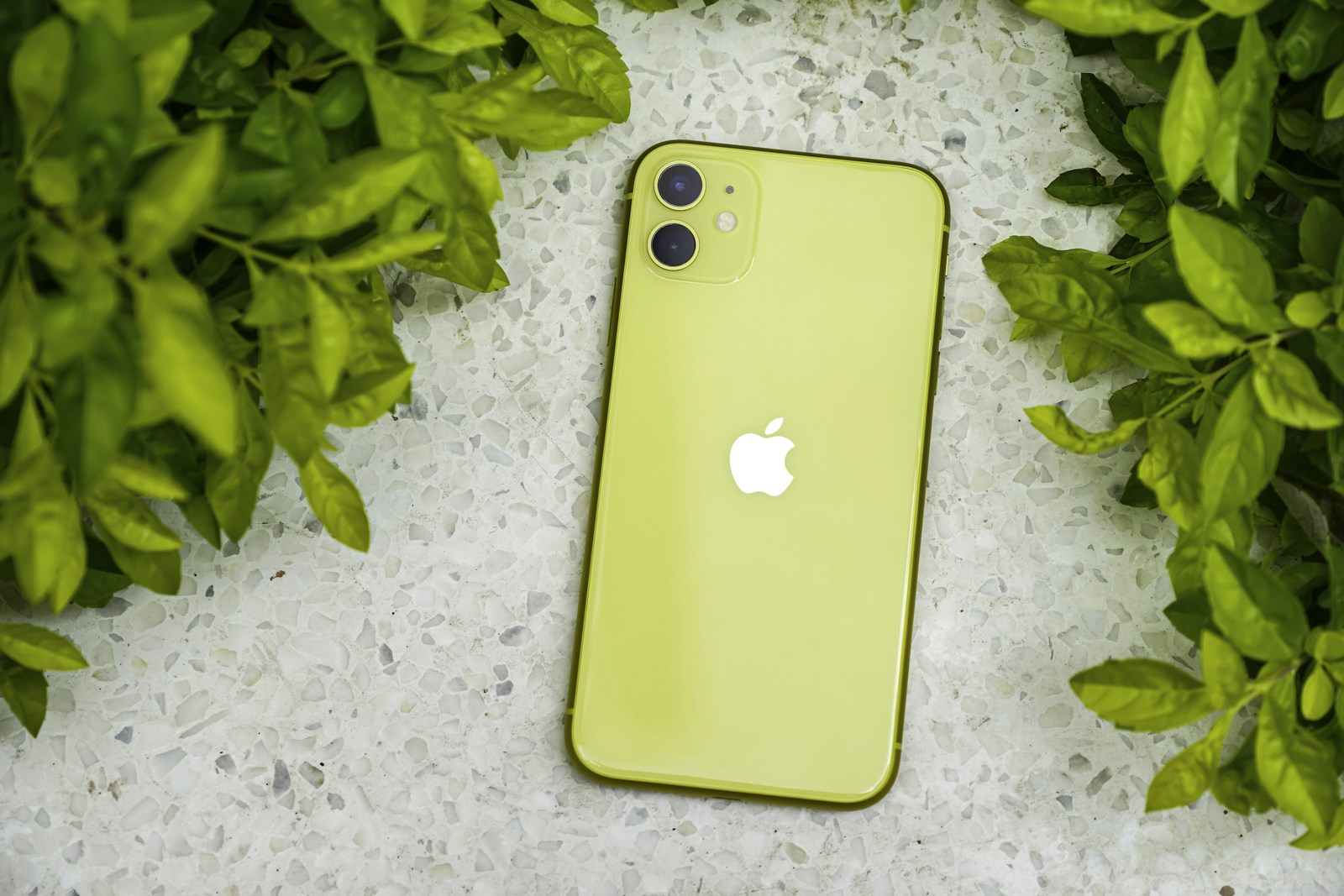
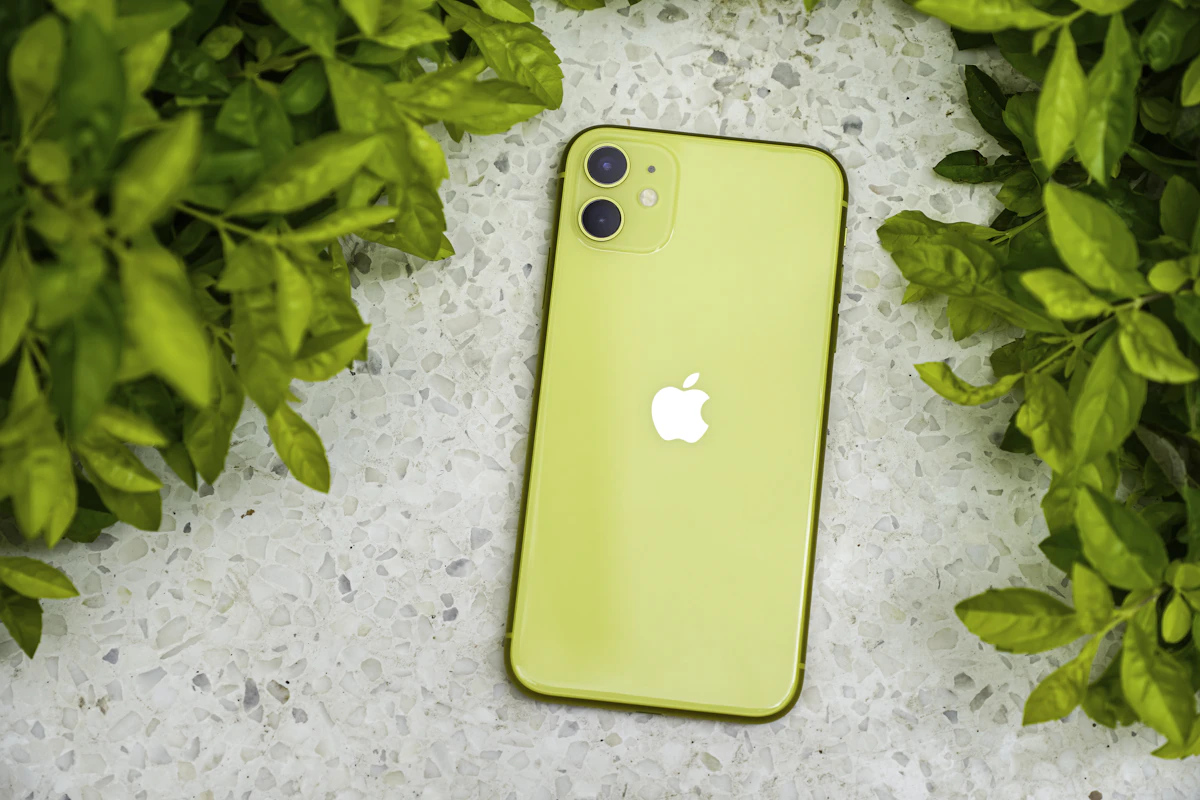
Pick up almost any phone released this year. A slab of glass. Barely-there bezels. No physical keyboard. One camera bump on the back, a notch or a hole-punch up front, and a home screen made of a grid of icons.
That shape didn’t happen by accident, and it didn’t happen everywhere at once. It happened in 2007, on one product, and the rest of the industry has spent nearly two decades converging on it. Samsung converged on it. Huawei converged on it. Every budget Android brand selling a $90 phone in a market with no Apple Store in sight converged on it too, whether their engineers ever admired Apple or not.
This isn’t a piece about picking sides between Apple and Android. It’s about something more useful to anyone building a product: when a design gets this fundamental right, competitors don’t out-design it, they copy the parts that worked and compete on everything else. And it’s about what happens next, because Apple is reportedly getting ready to change the blueprint again with the iPhone 18 series.
Before the Blueprint
It’s easy to forget how strange phones looked before 2007. Physical keyboards bolted onto the bottom half of the device. Styluses tucked into little silos on the side. Tiny resistive touchscreens that needed a fingernail, or a plastic stick, to register a tap reliably. Menus buried three and four levels deep, navigated with a D-pad and a “select” button, the same way you’d navigate a television remote.
Every manufacturer was solving the same underlying problem: how do people carry a computer in their pocket. And every manufacturer was solving it differently, because there was no dominant answer yet. Nokia had one theory. BlackBerry had another. Palm had a third. Each was a reasonable, internally consistent answer to the same question, and none of them looked like each other.
The iPhone didn’t win by adding more features than the competition. At launch, it famously lacked things rivals already had: no physical keyboard, no MMS, no third-party app store, no copy-paste, no 3G in some markets. Reviewers at the time pointed all of this out, correctly, as real gaps. What the iPhone had instead was a smaller, more disciplined set of decisions, executed completely, with nothing half-finished around the edges.
The Decisions That Became the Standard
Four choices from that original design ended up outliving the product cycles that introduced them, and outliving Apple’s own competitors in the process.
A single capacitive touchscreen as the primary input. No stylus, no keyboard, no D-pad, just fingers on glass, reacting instantly to a light touch instead of a hard press. Every smartphone shipped today, from any manufacturer, at any price point, still starts from this premise. It is so universal now that “touchscreen phone” and “smartphone” are basically the same phrase.
The home screen grid. One flat, scrollable field of icons, each one a direct door into an app, with no nested menus to dig through to find what you want. This is such an obvious pattern now that it barely registers as a decision at all. But it was one, made deliberately, and it’s the one every mobile operating system since has kept in some form, whether it’s iOS, Android, or the interfaces running on devices nobody would even call a phone anymore.
Software as the product, not the accessory. The hardware was the container; the operating system was what people actually experienced day to day. That reframing pushed the entire industry from “phone with software on it” to “software platform that happens to be shaped like a phone.” It’s also why the App Store, released a full year later in 2008, ended up mattering more than any single hardware spec Apple ever shipped. The store turned the phone into a platform other companies would build businesses on top of.
Removing the keyboard entirely, not shrinking it. This one is easy to undervalue in hindsight. Competitors assumed the keyboard was non-negotiable and spent years trying to shrink it, angle it, or slide it out from behind the screen. Apple’s answer was to delete it and put a software keyboard on the same glass as everything else, freeing up the entire front face for the display. Every full-screen phone since has inherited that same trade: give up the tactile keys, get the whole screen.
None of these four ideas were novel in isolation. Touchscreens existed before 2007. Grid layouts existed in other software. App stores of a sort existed on other platforms. What was new was removing everything that competed with them: buttons, styluses, physical keyboards, layered menus, unnecessary complexity, until only the essential interaction remained on the device.
Why “Copy the Winner” Became the Whole Industry’s Strategy
Once a design language answers the core interaction problem this cleanly, competing manufacturers face a real choice: invent a genuinely different paradigm from scratch, or adopt the working one and put their differentiation budget somewhere else entirely.
Almost everyone chose the second path. Android’s early releases borrowed the glass-slab, icon-grid template directly, then spent years of engineering effort on openness, customization, and hardware variety instead of reinventing the core interaction. Samsung built an entire empire on top of the same basic shape, differentiating with screen size, styluses re-added as an accessory rather than a requirement, and, more recently, folding hinges. Later entrants, from Chinese OEMs to budget brands selling phones for a fraction of an iPhone’s price, didn’t bother reinventing the interaction model at all. They inherited it wholesale and competed on price, camera megapixels, and battery capacity instead.
This is the part worth sitting with: the underlying design got so good, so quickly, that “different” stopped being a viable strategy for the core interaction, and only remained viable for the layer built on top of it. Nobody today pitches investors on “a phone with a fundamentally new way to touch the screen.” That question got answered once, for the whole industry, by one team, in one product cycle.
Where the Blueprint Goes Next: What the iPhone 18 Series Signals
If the first seventeen generations of iPhone were about refining a single blueprint, the iPhone 18 series, expected in the second half of 2026, is where the rumor mill says Apple starts testing what comes after it.
A few threads worth watching, based on what’s circulating in the supply chain and among Apple-focused reporters, all of it still speculative until Apple actually ships the hardware:
Under-display Face ID. The front camera and Face ID sensors have been the last visible interruption on an otherwise clean sheet of glass. Reports point to Apple continuing to push these components underneath the display itself on higher-end models, which would mean a genuinely uninterrupted front face for the first time since Face ID replaced the home button in 2017. It’s the same instinct that killed the keyboard in 2007, applied to the last visible seam left on the front of the device.
A foldable iPhone joining the lineup. This is the biggest structural change being discussed around the iPhone 18 generation: a book-style folding iPhone that opens into a tablet-sized screen. If it ships, it would be the first time since 2007 that Apple has offered a genuinely different physical form factor inside the same product line, rather than just scaling the existing slab up or down in size. Whether it succeeds or not, it’s a signal that Apple sees the flat slab as a mature design, not a finished one, and is willing to experiment with the shape again rather than only iterating on what’s inside it.
Apple’s own modem and silicon maturing further. Apple has been steadily moving communications hardware, the modem chip in particular, in-house rather than sourcing it from Qualcomm. Expect that transition to continue across the iPhone 18 lineup, alongside a new generation chip built on a more advanced manufacturing process. None of this is visible to a user picking the phone up in a store, which is exactly the point: it’s the same “software as the real product” philosophy from 2007, just moved one layer deeper into the hardware stack.
On-device AI as a selling point rather than a feature list item. Where early iPhones sold on the interaction model itself, current rumors suggest Apple is trying to sell the iPhone 18 generation on what the device can do proactively, using on-device models, rather than on a spec sheet of new sensors. That mirrors the original App Store bet: the hardware becomes the container again, and the differentiator moves to what runs on top of it.
None of this is confirmed until Apple actually announces it, and every one of these rumors could change or disappear entirely between now and launch. But the pattern is the more interesting story than any individual spec. Apple isn’t defending the 2007 blueprint forever. It built it, let the rest of the industry copy it for eighteen years, and now looks to be quietly asking the same question it asked back then: what can be removed or hidden next, so the interaction gets simpler instead of more crowded.
The Lesson for Founders
Most founders assume differentiation means doing everything differently from the competition. The iPhone’s history, from 2007 through whatever the iPhone 18 series turns out to be, says otherwise.
1. Subtraction beats addition when you’re defining a category. The original iPhone shipped with less than its competitors had. It won anyway, because what it removed, styluses, keyboards, layered menus, mattered more than what it lacked, copy-paste, MMS, a third-party app store. Before adding a feature to your product, ask what you could remove instead that would make the core interaction click.
2. Nail the primary interaction before anything else. Every other decision on the original iPhone was downstream of one question: how does a finger control this screen. If your product has one interaction that users repeat constantly, that’s the one worth obsessing over. Everything else is furniture arranged around it.
3. Being copied is a signal, not a threat. When competitors imitate your core mechanic instead of attacking it, that’s confirmation you solved the right problem. The response isn’t to guard the mechanic protectively. It’s to keep moving and compete on the next layer, the way Apple kept shipping ecosystem and silicon advantages while the rest of the industry caught up on hardware shape.
4. A defensible design isn’t the one with the most features. It’s the one that becomes invisible. Nobody thinks about “tapping an icon” as an interaction anymore. It just is one. That’s the end state worth building toward: a design so well-fitted to the problem that it stops looking like a choice and starts looking like the only way it could have been done.
5. Even the winning blueprint has an expiration date, and the original author should be the one to retire it. The rumors around under-display sensors and a folding form factor in the iPhone 18 generation are a reminder that no design stays optimal forever. The company that defined the category is also the one best positioned to know when its own blueprint has started to show its age, and it would rather cannibalize its own design than let a competitor do it first. Founders should treat their own breakout product decisions the same way: revisit them on your own schedule, before the market forces the question.
The Real Takeaway
Every glass-and-metal phone in every pocket right now, regardless of brand, is running on a design decision made once, refined for nearly two decades, and never fundamentally replaced, only extended. That’s not a story about Apple’s marketing budget. It’s a story about what happens when a product team solves the actual problem in front of them instead of chasing a longer feature list, and then keeps revisiting that solution long after everyone else has stopped questioning it.
For founders, the takeaway isn’t “copy Apple.” It’s this: find the one interaction your users repeat the most, strip away everything that gets in its way, get it so right that your competitors’ best move is to copy it too, and then keep asking what you’d remove next, because the company that built the blueprint is still asking that question, generation after generation, all the way to the iPhone 18.
About the Author

Ssenkima Ashiraf Founder & Marketing Director at BuzTip
Helping startups grow with smart tools, honest lessons, and zero hype.